2014年5月15日 星期四

2014.05.15 note: “Where Are You Going, Where Have You Been?” (week 13)

1.  “Where Are You Going, Where Have You Been?”
"Where Are You Going, Where Have You Been?" is a frequently anthologized short story written by Joyce Carol Oates. The story first appeared in the Fall 1966 edition of Epoch Magazine. It was inspired by three Tucson, Arizona murders committed by Charles Schmid, which were profiled in Life magazine in an article written by Don Moser on March 4, 1966. Oates said that she dedicated the story to Bob Dylan because she was inspired to write it after listening to his song "It's All Over Now, Baby Blue."

*"It's All Over Now, Baby Blue." (music link)

*some excerpts:
  • It was a boy with shaggy black hair, in a convertible jalopy painted gold. → convertible 敞篷車、jalopy老爺車
  • Her name was Connie. She was fifteen and she had a quick, nervous giggling habit of craning her neck to glance into mirrors or checking other people's faces to make sure her own was all right. → Connie is a beautiful, self-absorbed, 15 year-old girl.
  •  a feeling, mixed up with the urgent insistent pounding of the music and the humid night air of July. 
  •             She went into the kitchen and approached the door slowly, then hung out the screen door, her bare toes curling down off the step. There were two boys in the car and now she recognized the driver: he had shaggy, shabby black hair that looked crazy as a wig and he was grinning at her.→kitchen (vulnerability of woman);shaggy 長滿粗毛的、 shabby 襤褸的
* fly : 三重影像
→1) 揮之不去的思緒 2)媽媽在耳邊的嘮叨 3) 招蜂引蝶
---------------

2.Irwin Allen Ginsberg
Allenginsberg.jpg
Irwin Allen Ginsberg was an American poet and one of the leading figures of both the Beat Generation of the 1950s and the counterculture that soon would follow. He vigorously opposed militarism, economic materialismand sexual repression. Ginsberg is best known for his epic poem "Howl", in which he denounced what he saw as the destructive forces of capitalism and conformity in the United States.[1][2][3]

*Kill Your Darlings (film)
Kill Your Darlings (2013) Poster

In the early 1940s, Alan Ginsberg is an English major in Columbia University, only to learn more than he bargained for. Dissatisfied by the orthodox attitudes of the school, Alan finds himself drawn to iconoclastic colleagues like Lucien Carr, William S. Burroughs and Jack Kerouac. Together, this gang would explore bold new literary ideas that would challenge the sensibilities of their time as the future Beat Generation. However, for all their creativity, their very appetites and choices lead to more serious transgressions that would mark their lives forever. 
------------------

3.Equus(play)
Equusplaybookcover2.JPG
Equus is a play by Peter Shaffer written in 1973, telling the story of a psychiatrist who attempts to treat a young man who has a pathological religious fascination with horses.[1]
*Shaffer was inspired to write Equus when he heard of a crime involving a 17-year-old who blinded six horses in a small town nearSuffolk.[2] He set out to construct a fictional account of what might have caused the incident, without knowing any of the details of the crime. The play's action is something of a detective story, involving the attempts of the child psychiatrist, Dr. Martin Dysart, to understand the cause of the boy's actions while wrestling with his own sense of purpose.[3] The stage show ran in London between 1973 and 1975: later came the Broadway productions that starred Anthony Hopkins as Dysart (later played by Richard Burton,Leonard Nimoy, and Anthony Perkins), and from the London production, Peter Firth as Alan. Tom Hulce replaced Firth during the Broadway run. The Broadway production ran for 1,209 performances. Marian Seldes appeared in every single performance of the Broadway run, first in the role of Hesther and then as Dora.
-------------------
4.Beat Generation (垮掉的一代)
The Beat Generation was a group of American post-World War II writers who came to prominence in the 1950s, as well as the cultural phenomena that they both documented and inspired. Central elements of "Beat" culture included rejection of received standards, innovations in style, experimentation with drugs, alternative sexualities, an interest in religion, a rejection of materialism, and explicit portrayals of the human condition.[1]
Allen Ginsberg's Howl (1956), William S. Burroughs's Naked Lunch (1959) and Jack Kerouac's On the Road (1957) are among the best known examples of Beat literature.[2] BothHowl and Naked Lunch were the focus of obscenity trials that ultimately helped to liberalize publishing in the United States.[3][4] The members of the Beat Generation developed a reputation as new bohemian hedonists, who celebrated non-conformity and spontaneous creativity.
In the 1960s, elements of the expanding Beat movement were incorporated into the hippie and larger counterculture movements.
----------------------
5. Lost Generation(失落的一代)
The "Lost Generation" was the generation that came of age during World War I. The term was popularized by Ernest Hemingway, who used it as one of two contrasting epigraphs for his novel, The Sun Also Rises. 
*This generation included distinguished artists such as F. Scott Fitzgerald,[2] T. S. Eliot,John Dos Passos, Waldo Peirce, Isadora Duncan, Abraham Walkowitz, Alan Seeger, and Erich Maria Remarque.
------------------

6.The Secret Garden
The Secret Garden book cover - Project Gutenberg eText 17396.jpg
The Secret Garden is a novel by Frances Hodgson Burnett. It was inihe tially published in serial format starting in the autumn of 1910, and was first published in its entirety in 1911. It is now one of Burnett's most popular novels, and is considered to be a classic of English children's literature. Several stage and film adaptations have been produced.

*character
Mary Lennox: the most disagreeable-looking child with sour expression (愁眉苦臉又不令人討喜)


Word

1. select se- apart from;  elect e- out

2.expatriate 外籍人士

3.charismatic 有魅力的

4.fretful 焦急的,難以取悅的

2014年5月8日 星期四

2014. 05.08 note:“Where Are You Going, Where Have You Been? (week 12)

Note

1. The Rocking Horse Winner
(full text)

*character:
Paul: A young boy who notices that his mother doesn’t love him and his sisters, even though she “adores” them.[1] When he receives a rocking horse for Christmas, he rides it often and comes to find that he can predict what horse is going to win the next big horse race.
Hester: Paul's mother. She becomes “dissatisfied with her marriage” when she finds that her husband is not lucky and doesn't make enough money.[2]
Bassett: The family gardener and friend. Is the one who gets Paul into horse racing, and later becomes “betting partners”.[2]
Oscar Creswell: Paul's uncle and his mother's brother. Provided the money that Paul used to make his first win at the horse race. Signed the lawyer papers in order for Paul's mother to receive “one thousand pounds at a time, on the mother's birthday, for the next five years”.[1] Oscar becomes partners with Paul and Bassett.

*some excerpts:

  • They looked at her coldly, as if they were finding fault with her. And hurriedly she felt she must cover up some fault in herself. Yet what it was that she must cover up she never knew. 
  • The big doll, sitting so pink and smirking in her new pram.→ smirk:傻笑、pram:搖籃床
  • Yet nobody ever said it aloud. The whisper was everywhere, and therefore no one spoke it. Just as no one ever says: "We are breathing!" in spite of the fact that breath is coming and going all the time. 
  •  "Filthy lucre does mean money," said the mother. "But it's lucre, not luck."(pun) lucre錢財←→luck
  • staring fixedly into its lowered face→ fixedly 死盯住
  • But Paul only gave a blue glare from his big, rather close-set eyes. He would speak to nobody when he was in full tilt. His mother watched him with an anxious expression on her face. →blue eyes: sense of innocence and ignorance
  • I wish he'd leave off. →停下來
---------------

2. Hester (the name of Paul's mom):為具有負面形象的女子名
----------------

3. Joyce Carol Oates
Joyce Carol Oates (born June 16, 1938) is an American author. Oates published her first book in 1963 and has since published over forty novels, as well as a number of plays and novellas, and many volumes of short stories, poetry, and nonfiction. She has won many awards for her writing, including the National Book Award,[1] for her novel them (1969), two O. Henry Awards, and the National Humanities Medal. Her novels Black Water (1992), What I Lived For (1994), and Blonde (2000) were nominated for the Pulitzer Prize.
---------------

4.By the North Gate
By the North Gate is a collection of short stories by Joyce Carol Oates. It was the author's first book, first published by Vanguard Press in 1963.
ByTheNorthGate.JPG
It was last published in 1971 by Fawcett. Two stories in the collection, "Edge of the World" and "The Fine White Mist of Winter", were later collected in her book Where are you Going, Where have you Been?: Selected Early Stories (1993).
--------------------
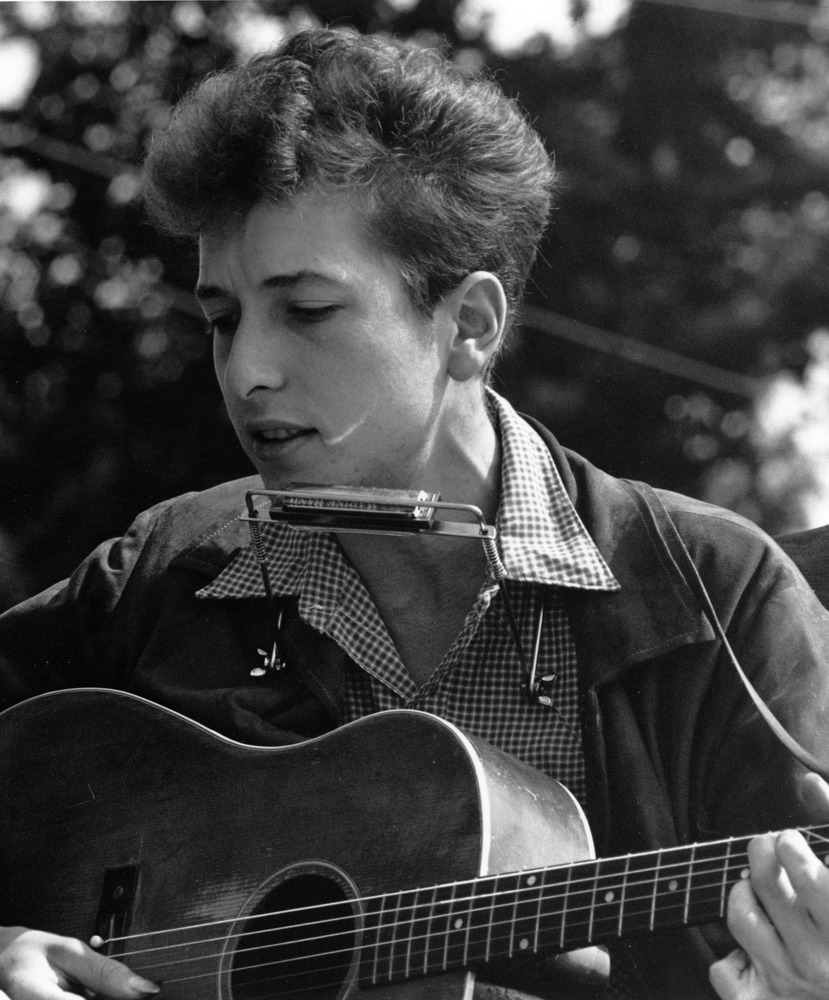
5.Bob Dylan 

Blown in the Wind (MUSIC LINK)
How many roads most a man walk down
Before you call him a man ?
How many seas must a white dove sail
Before she sleeps in the sand ?
Yes, how many times must the cannon balls fly
Before they're forever banned ?
The answer my friend is blowin' in the wind
The answer is blowin' in the wind.

Yes, how many years can a mountain exist
Before it's washed to the sea ?
Yes, how many years can some people exist
Before they're allowed to be free ?
Yes, how many times can a man turn his head
Pretending he just doesn't see ?
The answer my friend is blowin' in the wind
The answer is blowin' in the wind.

Yes, how many times must a man look up
Before he can see the sky ?
Yes, how many ears must one man have
Before he can hear people cry ?
Yes, how many deaths will it take till he knows
That too many people have died ?
The answer my friend is blowin' in the wind
The answer is blowin' in the wind.

→ anti-war (反越戰)
--------------------


Word

1.She racked her brains.
→腦袋整理一下、整理思緒

2. deep line=wrinkle(印記)

3. keep
*keep promise
*keep diary

4.vague不確定
   vogue 時尚

5.furious / madly/frenzy 震怒、瘋狂

6.jockey 賽馬騎師


7. DJ= Disk Jockey

2014年5月1日 星期四

2014.05.01 note:Continue Lawrence (week 11)

Note

1. detective fiction
Detective fiction is a sub-genre of crime fiction and mystery fiction in which an investigator or a detective—either professional or amateur—investigates a crime, often murder.
----------------------

2.Sherlock Holmes
Sherlock Holmes Portrait Paget.jpg
Sherlock Holmes  is a fictional detective created by Scottish author and physician Sir Arthur Conan Doyle. A London-based "consulting detective" whose abilities border on the fantastic, Holmes is famous for his astute logical reasoning, his ability to adopt almost any disguise, and his use of forensic science skills to solve difficult cases.

*所有的魔鬼都在細節裡
-------------------

3.Pamela, or Virtue Rewarded (sentimental novel)

Pamela, or Virtue Rewarded is an epistolary novel by Samuel Richardson, first published in 1740. It tells the story of a beautiful 15-year old maidservant named Pamela Andrews, whose country landowner master, Mr. B, makes unwanted advances towards her after the death of his mother, whose maid Pamela had been since age 12. Mr. B is infatuated with her, first by her looks and then her innocence and intelligence, but his high rank hinders him from proposing marriage. He abducts her, locks her up in one of his estates, and attempts to seduce and rape her. She rejects him continually, but starts to realize that she is falling in love with him. He intercepts her letters to her parents; reading them, he becomes even more enamored by her innocence, intelligence, and continuous escape attempts. Her virtue is eventually rewarded when he sincerely proposes an equitable marriage to her. In the novel's second part, Pamela attempts to build a successful relationship with him and to acclimatise to upper class society. The story, a best-seller of its time, was very widely read but criticised for its perceived licentiousness.
-----------------------

4,Don Quixote

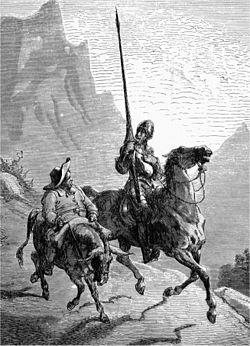
Don Quixote  is a Spanish novel by Miguel de Cervantes Saavedra. It follows the adventures of Alonso Quixano, an hidalgo who reads so many chivalric novels that he decides to set out to revive chivalry, under the name Don Quixote. He recruits a simple farmer, Sancho Panza, as his squire, who often employs a unique, earthly wit in dealing with Don Quixote's rhetorical orations on antiquated knighthood. Don Quixote is met by the world as it is, initiating such themes asintertextuality, realism, metatheatre, and literary representation.

* a novel about anti-chivalry & anti-romance
*現代版本: Shrek
Shrek.jpg

------------------

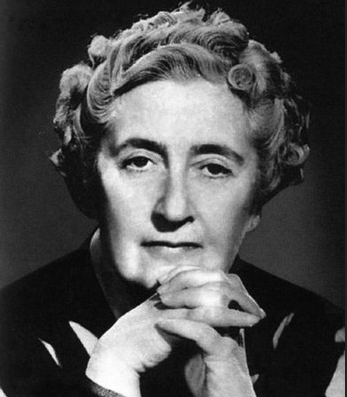
5.Agatha Christie
Agatha Christie.png

Dame Agatha Mary Clarissa Christie was an English crime novelist,short story writer, and playwright. She also wrote six romances under the name Mary Westmacott, but she is best known for the 66 detective novels and 14 short story collections she wrote under her own name, most of which revolve around the investigations of such characters as Hercule Poirot, Miss Jane Marple and Tommy and Tuppence. She also wrote the world's longest-running play,The Mousetrap.[1]

*Death on the Nile
Death on the Nile First Edition Cover 1937.jpg
Death on the Nile is a work of detective fiction by Agatha Christie and first published in the UK by the Collins Crime Club on 1 November 1937.
The book features the Belgian detective Hercule Poirot. The action takes place in Egypt, mostly on the Nile River.
----------------------
6.point of view
*first-person narrative:  It can show the deeply feeling but sometimes will be blind as an unreliable narrator. (e.g, Araby)
*third-person narrative: standing in a neutral position(e.g, Harry Potter)

------------------

7.The Sun Also Rises


The Sun Also Rises is a 1926 novel written by American author Ernest Hemingway about a group of American and British expatriates who travel from Paris to the Festival of San Fermín in Pamplona to watch the running of the bulls and the bullfights. An early and enduringmodernist novel, it received mixed reviews upon publication. Hemingway biographer Jeffrey Meyers writes that it is "recognized as Hemingway's greatest work".

*The novel is a roman à clef; the characters are based on real people of Hemingway's circle, and the action is based on real events. In the novel, Hemingway presents his notion that the "Lost Generation", considered to have been decadent, dissolute and irretrievably damaged by World War I, was resilient and strong.[4] Additionally, Hemingway investigates the themes of love, death, renewal in nature, and the nature of masculinity.
----------------------

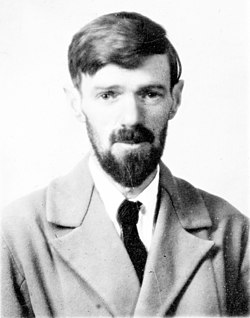
8. D,H. Lawrence
D H Lawrence passport photograph.jpg
David Herbert Lawrence (11 September 1885 – 2 March 1930) was an English novelist, poet, playwright, essayist, literary critic and painter who published as D. H. Lawrence. His collected works, among other things, represent an extended reflection upon the dehumanising effects of modernity and industrialisation. In them, some of the issues Lawrence explores are emotional health, vitality, spontaneity and instinct.

*Piano

BY D. H. (DAVID HERBERT) LAWRENCE
Softly, in the dusk, a woman is singing to me;
Taking me back down the vista of years, till I see
A child sitting under the piano, in the boom of the tingling strings
And pressing the small, poised feet of a mother who smiles as she sings.

In spite of myself, the insidious mastery of song
Betrays me back, till the heart of me weeps to belong
To the old Sunday evenings at home, with winter outside
And hymns in the cosy parlour, the tinkling piano our guide.

So now it is vain for the singer to burst into clamour
With the great black piano appassionato. The glamour
Of childish days is upon me, my manhood is cast
Down in the flood of remembrance, I weep like a child for the past.
----------------------
9."The Rocking-Horse Winner" 
"The Rocking-Horse Winner" is a short story by D. H. Lawrence.
*plot
The story describes a young middle-class Englishwoman who "had no luck." Though outwardly successful, she is haunted by a sense of failure; her husband is a ne'er-do-well and her work as a commercial artist doesn't earn as much as she'd like. The family's lifestyle exceeds its income and unspoken anxiety about money permeates the household. Her children, a son Paul and his two sisters, sense this anxiety; moreover, the kids even claim they can hear the house whispering "There must be more money."
Paul tells his Uncle Oscar Cresswell about betting on horse races with Bassett, the gardener. He's been placing bets using his pocket money and has won and saved three hundred twenty pounds. Sometimes he says he is "sure" of a winner for an upcoming race, and the horses he names do in fact win, sometimes at remarkable odds. Uncle Oscar and Bassett both place large bets on the horses Paul names.
After further winning, Paul and Oscar arrange to give the mother a gift of five thousand pounds, but the gift only lets her spend more. Disappointed, Paul tries harder than ever to be "lucky". As the Derby approaches, Paul is determined to learn the winner. Concerned about his health, his mother rushes home from a party and discovers his secret. He has been spending hours riding his rocking horse, sometimes all night long, until he "gets there", into a clairvoyant state where he can be sure of the winner's name.
Paul remains ill through the day of the Derby. Informed by Cresswell, Bassett has placed Paul's bet on Malabar, at fourteen to one. When he is informed by Bassett that he now has 80,000 pounds, Paul says to his mother:
"I never told you, mother, that if I can ride my horse, and get there, then I'm absolutely sure – oh absolutely! Mother, did I ever tell you? I am lucky!"
"No, you never did," said his mother.
But the boy died in the night.
And even as he lay dead, his mother heard her brother's voice saying to her, "My God, Hester, you're eighty-odd thousand to the good, and a poor devil of a son to the bad. But, poor devil, poor devil, he's best gone out of a life where he rides his rocking-horse to find a winner."
--------------------

10.The Waste of Land
The Wasteland.djvu
"The Waste Land", by T.S. Eliot, is widely regarded as "one of the most important poems of the 20th century" and a central text inModernist poetry.[1][2] Published in 1922, the 434-line[B] poem first appeared in the United Kingdom in the October issue of The Criterion and in the United States in the November issue of The Dial. It was published in book form in December 1922. Among its famous phrases are "April is the cruellest month", "I will show you fear in a handful of dust", and the mantra in the Sanskrit language "Shantih shantih shantih".[C]
Eliot's poem loosely follows the legend of the Holy Grail and the Fisher King combined with vignettes of the contemporary social condition in British society. Eliot employs many literary and cultural allusions from the Western canon and from Buddhism and theHindu Upanishads. Because of this, critics and scholars regard the poem as obscure.[3] The poem shifts between voices of satire andprophecy featuring abrupt and unannounced changes of speaker, location and time and conjuring of a vast and dissonant range of cultures and literatures.


Word

1.amateur 業餘

2,mock (make fun of...)

3. tedious 乏味的、囉嗦的

4.appassionato (a.) 熱情的

5.discreet 不謹慎

6.My dream will be materialized. (被實現)