1. detective fiction
Detective fiction is a sub-genre of crime fiction and mystery fiction in which an investigator or a detective—either professional or amateur—investigates a crime, often murder.
----------------------
2.Sherlock Holmes

Sherlock Holmes is a fictional detective created by Scottish author and physician Sir Arthur Conan Doyle. A London-based "consulting detective" whose abilities border on the fantastic, Holmes is famous for his astute logical reasoning, his ability to adopt almost any disguise, and his use of forensic science skills to solve difficult cases.
*所有的魔鬼都在細節裡
-------------------
3.Pamela, or Virtue Rewarded (sentimental novel)

Pamela, or Virtue Rewarded is an epistolary novel by Samuel Richardson, first published in 1740. It tells the story of a beautiful 15-year old maidservant named Pamela Andrews, whose country landowner master, Mr. B, makes unwanted advances towards her after the death of his mother, whose maid Pamela had been since age 12. Mr. B is infatuated with her, first by her looks and then her innocence and intelligence, but his high rank hinders him from proposing marriage. He abducts her, locks her up in one of his estates, and attempts to seduce and rape her. She rejects him continually, but starts to realize that she is falling in love with him. He intercepts her letters to her parents; reading them, he becomes even more enamored by her innocence, intelligence, and continuous escape attempts. Her virtue is eventually rewarded when he sincerely proposes an equitable marriage to her. In the novel's second part, Pamela attempts to build a successful relationship with him and to acclimatise to upper class society. The story, a best-seller of its time, was very widely read but criticised for its perceived licentiousness.
-----------------------
4,Don Quixote
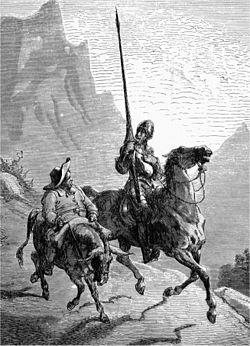
Don Quixote is a Spanish novel by Miguel de Cervantes Saavedra. It follows the adventures of Alonso Quixano, an hidalgo who reads so many chivalric novels that he decides to set out to revive chivalry, under the name Don Quixote. He recruits a simple farmer, Sancho Panza, as his squire, who often employs a unique, earthly wit in dealing with Don Quixote's rhetorical orations on antiquated knighthood. Don Quixote is met by the world as it is, initiating such themes asintertextuality, realism, metatheatre, and literary representation.
* a novel about anti-chivalry & anti-romance
*現代版本: Shrek

------------------
5.Agatha Christie
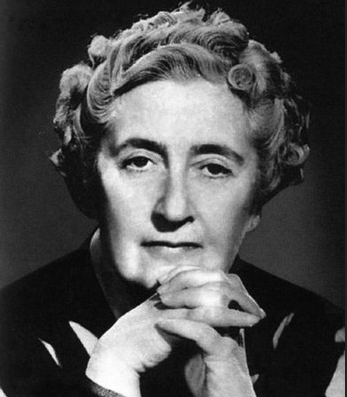
Dame Agatha Mary Clarissa Christie was an English crime novelist,short story writer, and playwright. She also wrote six romances under the name Mary Westmacott, but she is best known for the 66 detective novels and 14 short story collections she wrote under her own name, most of which revolve around the investigations of such characters as Hercule Poirot, Miss Jane Marple and Tommy and Tuppence. She also wrote the world's longest-running play,The Mousetrap.[1]
*Death on the Nile

Death on the Nile is a work of detective fiction by Agatha Christie and first published in the UK by the Collins Crime Club on 1 November 1937.
The book features the Belgian detective Hercule Poirot. The action takes place in Egypt, mostly on the Nile River.
----------------------
6.point of view
*first-person narrative: It can show the deeply feeling but sometimes will be blind as an unreliable narrator. (e.g, Araby)
*third-person narrative: standing in a neutral position(e.g, Harry Potter)------------------
7.The Sun Also Rises

The Sun Also Rises is a 1926 novel written by American author Ernest Hemingway about a group of American and British expatriates who travel from Paris to the Festival of San Fermín in Pamplona to watch the running of the bulls and the bullfights. An early and enduringmodernist novel, it received mixed reviews upon publication. Hemingway biographer Jeffrey Meyers writes that it is "recognized as Hemingway's greatest work".
*The novel is a roman à clef; the characters are based on real people of Hemingway's circle, and the action is based on real events. In the novel, Hemingway presents his notion that the "Lost Generation", considered to have been decadent, dissolute and irretrievably damaged by World War I, was resilient and strong.[4] Additionally, Hemingway investigates the themes of love, death, renewal in nature, and the nature of masculinity.
----------------------
8. D,H. Lawrence
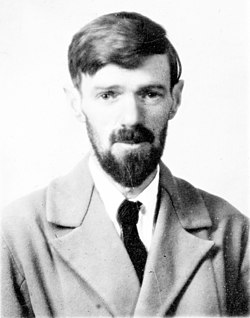
David Herbert Lawrence (11 September 1885 – 2 March 1930) was an English novelist, poet, playwright, essayist, literary critic and painter who published as D. H. Lawrence. His collected works, among other things, represent an extended reflection upon the dehumanising effects of modernity and industrialisation. In them, some of the issues Lawrence explores are emotional health, vitality, spontaneity and instinct.
*Piano
Softly, in the dusk, a woman is singing to me;
Taking me back down the vista of years, till I see
A child sitting under the piano, in the boom of the tingling strings
And pressing the small, poised feet of a mother who smiles as she sings.
In spite of myself, the insidious mastery of song
Betrays me back, till the heart of me weeps to belong
To the old Sunday evenings at home, with winter outside
And hymns in the cosy parlour, the tinkling piano our guide.
So now it is vain for the singer to burst into clamour
With the great black piano appassionato. The glamour
Of childish days is upon me, my manhood is cast
Down in the flood of remembrance, I weep like a child for the past.
----------------------
9."The Rocking-Horse Winner"
*plot
The story describes a young middle-class Englishwoman who "had no luck." Though outwardly successful, she is haunted by a sense of failure; her husband is a ne'er-do-well and her work as a commercial artist doesn't earn as much as she'd like. The family's lifestyle exceeds its income and unspoken anxiety about money permeates the household. Her children, a son Paul and his two sisters, sense this anxiety; moreover, the kids even claim they can hear the house whispering "There must be more money."
Paul tells his Uncle Oscar Cresswell about betting on horse races with Bassett, the gardener. He's been placing bets using his pocket money and has won and saved three hundred twenty pounds. Sometimes he says he is "sure" of a winner for an upcoming race, and the horses he names do in fact win, sometimes at remarkable odds. Uncle Oscar and Bassett both place large bets on the horses Paul names.
After further winning, Paul and Oscar arrange to give the mother a gift of five thousand pounds, but the gift only lets her spend more. Disappointed, Paul tries harder than ever to be "lucky". As the Derby approaches, Paul is determined to learn the winner. Concerned about his health, his mother rushes home from a party and discovers his secret. He has been spending hours riding his rocking horse, sometimes all night long, until he "gets there", into a clairvoyant state where he can be sure of the winner's name.
Paul remains ill through the day of the Derby. Informed by Cresswell, Bassett has placed Paul's bet on Malabar, at fourteen to one. When he is informed by Bassett that he now has 80,000 pounds, Paul says to his mother:
"I never told you, mother, that if I can ride my horse, and get there, then I'm absolutely sure – oh absolutely! Mother, did I ever tell you? I am lucky!"
"No, you never did," said his mother.
But the boy died in the night.
--------------------And even as he lay dead, his mother heard her brother's voice saying to her, "My God, Hester, you're eighty-odd thousand to the good, and a poor devil of a son to the bad. But, poor devil, poor devil, he's best gone out of a life where he rides his rocking-horse to find a winner."
10.The Waste of Land

"The Waste Land", by T.S. Eliot, is widely regarded as "one of the most important poems of the 20th century" and a central text inModernist poetry.[1][2] Published in 1922, the 434-line[B] poem first appeared in the United Kingdom in the October issue of The Criterion and in the United States in the November issue of The Dial. It was published in book form in December 1922. Among its famous phrases are "April is the cruellest month", "I will show you fear in a handful of dust", and the mantra in the Sanskrit language "Shantih shantih shantih".[C]
Eliot's poem loosely follows the legend of the Holy Grail and the Fisher King combined with vignettes of the contemporary social condition in British society. Eliot employs many literary and cultural allusions from the Western canon and from Buddhism and theHindu Upanishads. Because of this, critics and scholars regard the poem as obscure.[3] The poem shifts between voices of satire andprophecy featuring abrupt and unannounced changes of speaker, location and time and conjuring of a vast and dissonant range of cultures and literatures.Word
1.amateur 業餘
2,mock (make fun of...)
3. tedious 乏味的、囉嗦的
4.appassionato (a.) 熱情的
5.discreet 不謹慎
6.My dream will be materialized. (被實現)