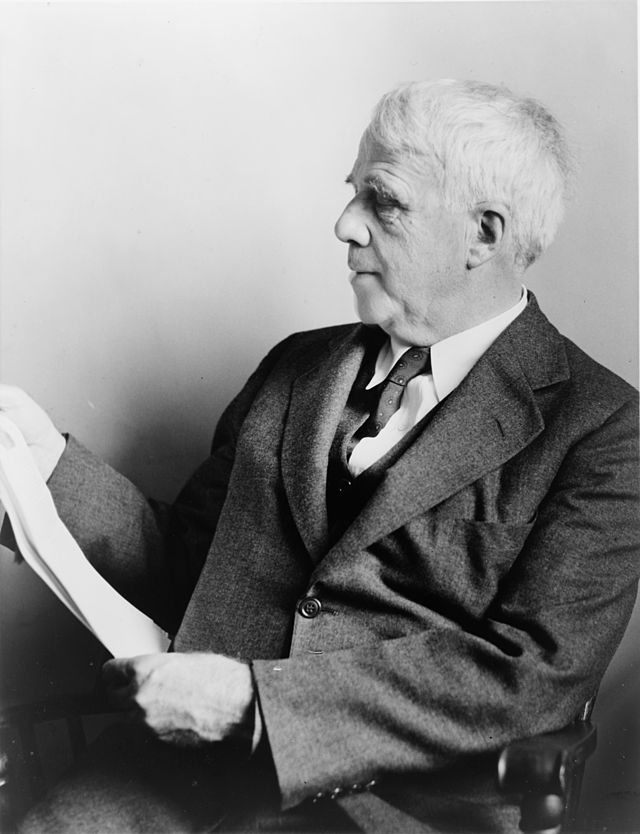
1) Pilgrim
A pilgrim (from the Latin peregrinus) is a traveler (literally one who has come from afar) who is on a journey to a holy place. Typically, this is a physical journey (often on foot) to some place of special significance to the adherent of a particular religious belief system. In the spiritual literature of Christianity, the concept of pilgrim and pilgrimage may refer to the experience of life in the world (considered as a period of exile) or to the inner path of the spiritual aspirant from a state of wretchedness to a state of beatitude.
*Puritan
The Puritans were a group of English Protestants in the 16th and 17th centuries, including, but not limited to, English Calvinists. Puritanism in this sense was founded by John Calvin from the clergy shortly after the accession of Elizabeth I of England in 1558, as an activist movement within the Church of England.
----------------------------------------
2) The Other Boleyn Girl 美人心機
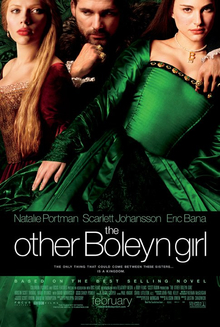
The Other Boleyn Girl is a 2008 drama film directed by Justin Chadwick. The screenplay by Peter Morgan was adapted from the 2001 novel of the same name byPhilippa Gregory. It is a romanticized account of the lives of 16th-century aristocrats Mary Boleyn, one-time mistress of King Henry VIII, and her sister, Anne, who became the monarch's ill-fated second wife, though much history is distorted.
-----------------------------------------------
3) The Canterbury Tales
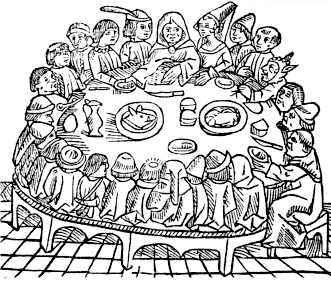
The Canterbury Tales is a collection of over 20 stories written in Middle English by Geoffrey Chaucer at the end of the 14th century, during the time of the Hundred Years' War. The tales (mostly written in verse, although some are in prose) are presented as part of a story-telling contest by a group of pilgrims as they travel together on a journey from Southwark to the shrine of Saint Thomas Becket at Canterbury Cathedral. The prize for this contest is a free meal at the Tabard Inn at Southwark on their return.
-------------------------------------------------
4) EPISCOPAL 聖公會

*The Episcopal Church (TEC) is a United States-based member church of the worldwide Anglican Communion. It is also known as the Episcopal Church in the United States of America (ECUSA). It is divided into nine provinces and has dioceses in the U.S., Taiwan, Micronesia, the Caribbean, Central and South America, as well as the Convocation of Episcopal Churches in Europe and the Navajoland Area Mission. The current Presiding Bishop of the Episcopal Church is Katharine Jefferts Schori, the first female primate in the Anglican Communion.
------------------------------------------------
5) propaganda 政治文宣

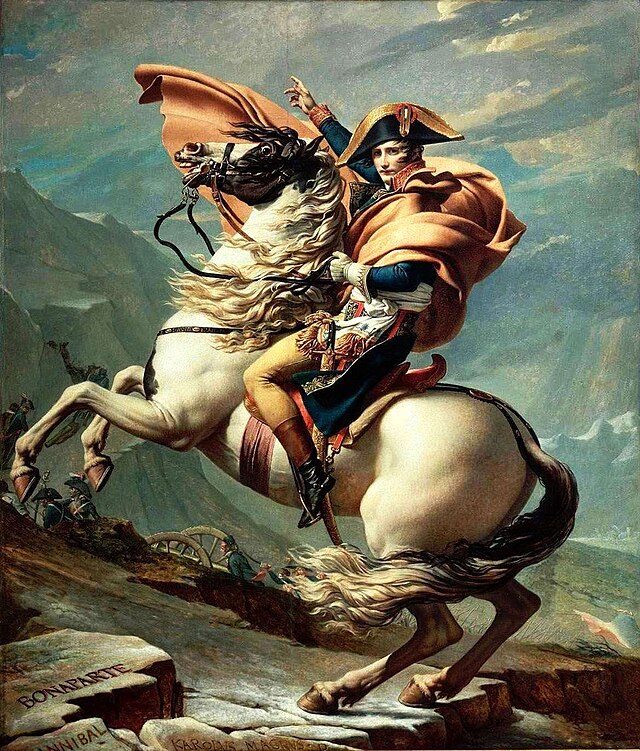
Propaganda is a form of communication aimed towards influencing the attitude of a population toward some cause or position.
Propaganda is information that is not impartial and used primarily to influence an audience and further an agenda, often by presenting facts selectively (thus possibly lying by omission) to encourage a particular synthesis, or using loaded messages to produce an emotional rather than rational response to the information presented. Propaganda can be used as a form of ideological or commercial warfare.
---------------------------------------------------
6) The Giver (記憶傳承人)

The Giver is a 1993 American children's novel (generally Young Adult or older) by Lois Lowry. It is set in a society which is at first presented as a utopian society but gradually appears more and more dystopian. The novel follows a boy named Jonas through the twelfth and thirteenth years of his life. The society has eliminated pain and strife by converting to "Sameness," a plan that has also eradicated emotional depth from their lives. Jonas is selected to inherit the position of Receiver of Memory, the person who stores all the past memories of the time before Sameness, in case they are ever needed to aid in decisions that others lack the experience to make. Jonas learns the truth about his dystopian society and struggles with its weight. The Community lacks any color, memory, climate and terrain whatsoever, all part of Sameness and this emphasizes the dystopian qualities of the Community.
------------------------------------------------------
7) predestination
Predestination, in theology, is the doctrine that all events have been willed by God. Explanations of predestination often seek to address the "paradox of free will", whereby God's omniscience seems incompatible with human free will. In this usage, predestination can be regarded as a form of religious determinism; and usually predeterminism.
* the person who is chosen to be saved/ rescued
--------------------------------------------
8) Jonathan Edwards

Jonathan Edwards (October 5, 1703 – March 22, 1758) was a Christian preacher, philosopher, and theologian. Edwards "is widely acknowledged to be America's most important and original philosophical theologian," and one of America's greatest intellectuals.[3][4] Edwards's theological work is broad in scope, but he was rooted in Reformed theology, the metaphysics of theological determinism, and the Puritan heritage. Recent studies have emphasized how thoroughly Edwards grounded his life's work on conceptions of beauty, harmony, and ethical fittingness, and how central The Enlightenment was to his mindset.[5] Edwards played a critical role in shaping the First Great Awakening, and oversaw some of the first revivals in 1733–35 at his church in Northampton, Massachusetts.
-----------------------------------------
9) Jamestown
→ 為紀念James 1 st
James 1st version of bible
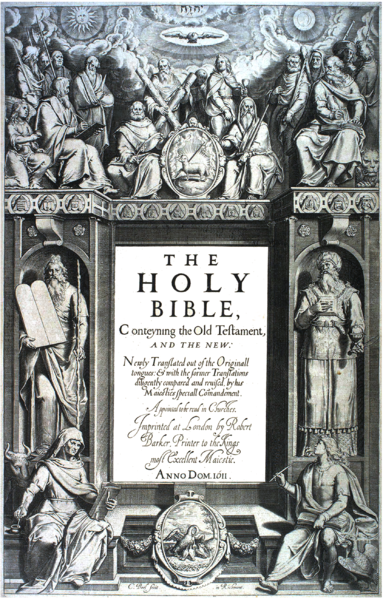
The King James Version (KJV), commonly known as the Authorized Version (AV) or King James Bible (KJB), is an English translation of the Christian Bible for theChurch of England begun in 1604 and completed in 1611.[a] First printed by the King's Printer Robert Barker, this was the third translation into English to be approved by the English Church authorities. The first was the Great Bible commissioned in the reign of King Henry VIII (1535), and the second was the Bishops' Bible of 1568.[3]In January 1604, King James VI and I convened the Hampton Court Conference where a new English version was conceived in response to the perceived problems of the earlier translations as detected by the Puritans,[4] a faction within the Church of England.
-------------------------------------------------
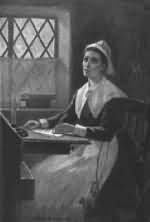
10) Anne Bradstreet
寫作特色
1.subjectivity
2.利用女性主義、符號學(simiology)
--------------------------------------------------
11) Sinners in the Hands of an Angry God

"Sinners in the Hands of an Angry God" is a sermon written by British Colonial Christian theologian Jonathan Edwards, preached to his own congregation in Northampton, Massachusetts to unknown effect,[1] and again on July 8, 1741 in Enfield, Connecticut.[2] Like Edwards' other works, it combines vivid imagery of Hell with observations of the world and citations of the scripture. It is Edwards' most famous written work, is a fitting representation of his preaching style,[3] and is widely studied by Christians and historians, providing a glimpse into the theology of the Great Awakening of c. 1730–1755.
This is a typical sermon of the Great Awakening, emphasizing the belief that Hell is a real place. Edwards hoped that the imagery and message of his sermon would awaken his audience to the horrific reality that awaited them should they continue without Christ.[4] The underlying point is that God has given humanity a chance to rectify their sins. Edwards says that it is the will of God that keeps wicked men from the depths of Hell. This act of restraint has given humanity a chance to mend their ways and return to Christ.
-----------------------------------
The Declaration of Independence is the usual name of a statement adopted by the Continental Congress on July 4, 1776, which announced that the thirteen American colonies,[2] then at war with Great Britain, regarded themselves as thirteen newly independent sovereign states, and no longer a part of the British Empire. Instead they formed a new nation—the United States of America. John Adams was a leader in pushing for independence, which was unanimously approved on July 2. A committee of five had already drafted the formal declaration, to be ready when Congress voted on independence. The term "Declaration of Independence" is not used in the document itself.
Adams persuaded the committee to select Thomas Jefferson to compose the original draft of the document,[3] which Congress would edit to produce the final version. The Declaration was ultimately a formal explanation of why Congress had voted on July 2 to declare independence from Great Britain, more than a year after the outbreak of the American Revolutionary War. The national birthday, Independence Day, is celebrated on July 4, although Adams wanted July 2.

Thomas Jefferson (April 13 [O.S. April 2] 1743 – July 4, 1826) was an American Founding Father, the principal author of the Declaration of Independence (1776), and the third President of the United States (1801–1809). He was a spokesman for democracy, and embraced the principles of republicanism and the rights of the individual with worldwide influence. At the beginning of the American Revolution, he served in the Continental Congress, representing Virginia, and then served as a wartime Governor of Virginia (1779–1781). In May 1785, he became the United States Minister to France and later the first United States Secretary of State (1790–1793) serving under President George Washington. In opposition to Alexander Hamilton's Federalism, Jefferson and his close friend, James Madison, organized the Democratic-Republican Party, and later resigned from Washington's cabinet. Elected Vice President in 1796 in the administration of John Adams, Jefferson opposed Adams, and with Madison secretly wrote the Kentucky and Virginia Resolutions, which attempted to nullify the Alien and Sedition Acts.
*We hold these truths to be self-evident, that all men are created equal, that they are endowed by their Creator with certain unalienable Rights, that among these are Life, Liberty and the pursuit of Happiness.
*The pursuit of happiness (film)
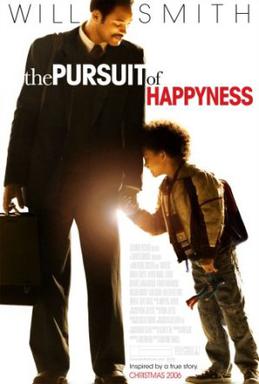
The Pursuit of Happyness is a 2006 American biographical drama film based on Chris Gardner's nearly one-year struggle with homelessness. Directed by Gabriele Muccino, the film features Will Smith as Gardner, an on-and-off-homeless salesman. Smith's son Jaden Smith co-stars, making his film debut as Gardner's son, Christopher Jr. Will Smith and Jaden Smith later appeared together in the film After Earth.
------------------------------------
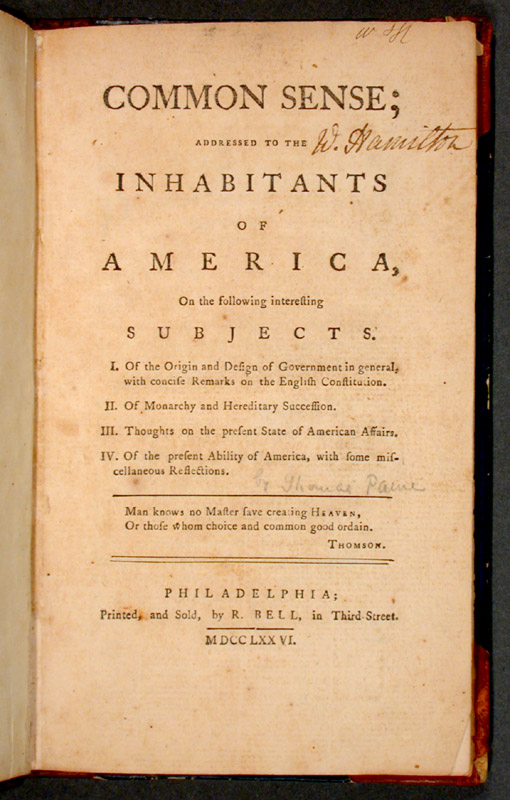
Common Sense[1] is a pamphlet written by Thomas Paine in 1775–76 that inspired people in the Thirteen Colonies to declare and fight for independence from Great Britain in the summer of 1776. In clear, simple language it explained the advantages of and the need for immediate independence. It was published anonymously on January 10, 1776, at the beginning of the American Revolution and became an immediate sensation. It was sold and distributed widely and read aloud at taverns and meeting places. Washington had it read to all his troops, which at the time had surrounded the British army in Boston. In proportion to the population of the colonies at that time (2.5 million), it had the largest sale and circulation of any book published in American history.
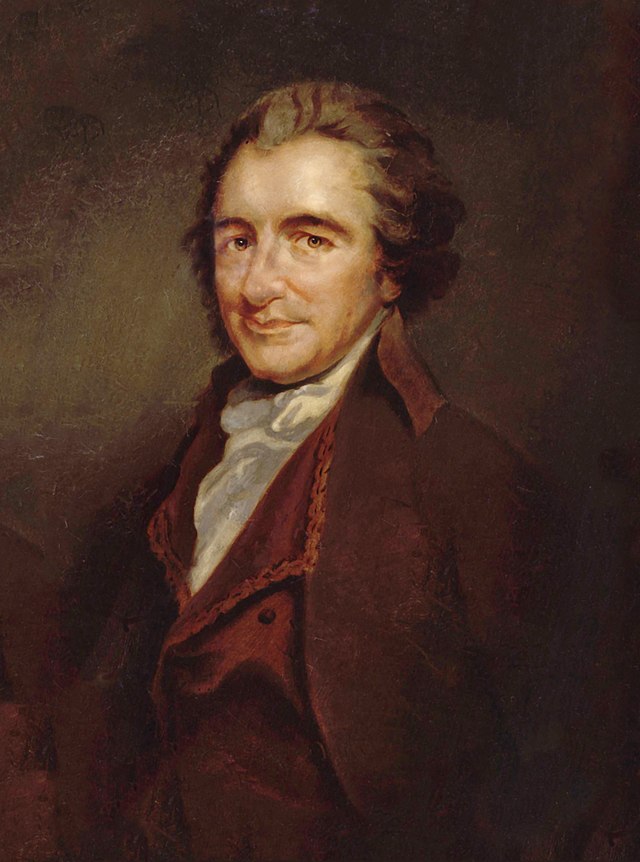
Thomas Paine (February 9, 1737 [O.S. January 29, 1736][Note 1][Note 2][Note 3] – June 8, 1809) was an English and American political activist, philosopher, political theorist and revolutionary. As the author of the two most influential pamphlets at the start of the American Revolution, he inspired the rebels in 1776 to declare independence from Britain.[1] His ideas reflected Enlightenment-era rhetoric of transnational human rights.[2] He has been called "a corsetmaker by trade, a journalist by profession, and a propagandist by inclination".
------------------------------------
14) The Federalist
The Federalist (later known as The Federalist Papers) is a collection of 85 articles and essays written by Alexander Hamilton, James Madison, and John Jay promoting the ratificationof the United States Constitution. Seventy-seven were published serially in The Independent Journal and The New York Packet between October of 1787 and August 1788. A compilation of these and eight others, called The Federalist; or, The New Constitution, was published in two volumes in 1788 by J. and A. McLean.[1] The collection's original title wasThe Federalist; the title The Federalist Papers did not emerge until the 20th century.
* 三權分立
legislative(立法) / executive (行政) / judiciary (司法)

James Madison, Jr. (March 16, 1751 – June 28, 1836) was an American statesman, political theorist and the fourth President of the United States (1809–1817). He is hailed as the "Father of the Constitution" for being instrumental in the drafting of the United States Constitution and as the key champion and author of the United States Bill of Rights.[2] He served as a politician much of his adult life.
----------------------------------------
1. abolish 2. amendment 3.
appropriation 4. boycott
5. eminent domain 6. executive 7.
filibuster 8. gerrymandering
9. impeachment 10. judicial 11.
laissez-faire 12. lame duck
13. legislature 14. liberty 15.
life 16. pursuit
17. ratification 18.
red herring 19. referendum 20. veto
------------------------------------
Word
1) emigrate 移居海外
2) ab- (負面)
*abhore 厭惡
*abolish (廢除)
Word:
1) pro- :in favor of
*propaganda
*proposal

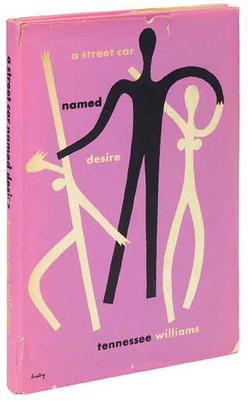 → A Street Car Named Desire