2014年11月26日 星期三

2014.11.26 note: Allan Poe (week12)

Note:

1) Allan Poe

* the father of the American short story, Poe developed three kinds of narrative:
(1) tale of horror which frequently make use of psychological abnormality, (2) prose-poems which are lavish with tone color and symbolism, (3) tales of ratiocination and detection.
---------------------------------------

2) Baltimore Ravens


The Baltimore Ravens are a professional American football team based in Baltimore, Maryland, playing in the North Division of the American Football Conference (AFC) in the National Football League (NFL). The team has played its home games at M&T Bank Stadium in downtown Baltimore since 1998, and is headquartered at the Under Armour Performance Center in Owings Mills.

*The Blind Side (film)
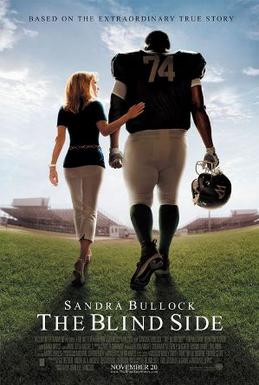
The Blind Side is a 2009 American semi-biographical sports drama film. It was written and directed by John Lee Hancock, and based on the 2006 book The Blind Side: Evolution of a Game by Michael Lewis.The story line features Michael Oher, an offensive lineman who played for the Baltimore Ravens of the NFL (he currently plays for the Tennessee Titans). The film follows Oher from his impoverished upbringing, through his years at Wingate Christian School (a fictional representation of Briarcrest Christian School in Memphis, Tennessee),[4] his adoption by Sean and Leigh Anne Tuohy, to his position as one of the most highly coveted prospects incollege football, then finally becoming a first-round pick in the NFL by the Baltimore Ravens.
----------------------------------------------------------

3) The Grapes of Wrath 

The Grapes of Wrath is an American realist novel written by John Steinbeck and published in 1939. The book won the National Book Award[2] and Pulitzer Prize[3] for fiction, and it was cited prominently when Steinbeck was awarded the Nobel Prize in 1962.

*John Steinbeck
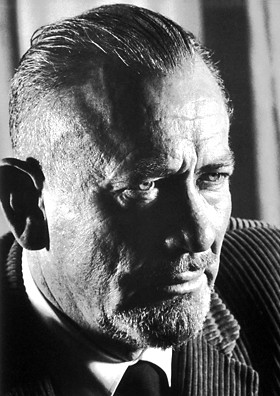
John Ernst Steinbeck, Jr. (February 27, 1902 – December 20, 1968) was an American author of twenty-seven books, including sixteen novels, six non-fiction books, and five collections of short stories. He is widely known for the comic novels Tortilla Flat (1935) and Cannery Row (1945), the multi-generation epic East of Eden(1952), and the novellas Of Mice and Men (1937) and The Red Pony (1937). The Pulitzer Prize-winning The Grapes of Wrath (1939), widely attributed to be part of theAmerican literary canon,[2] is considered Steinbeck's masterpiece. In the first 75 years since it was published, it sold 14 million copies.
------------------------------------------------

4)Ode of West Wind
Ode to the West Wind is an ode, written by Percy Bysshe Shelley in 1819 near Florence, Italy.
The poem allegorises the role of the poet as the voice of change and revolution. At the time of composing this poem, Shelley without doubt had thePeterloo Massacre of August 1819 in mind. His other poems written at the same time—"The Masque of Anarchy," "Prometheus Unbound," and "England in 1819"—take up these same problems of political change, revolution, and role of the poet.


V
Make me thy lyre, even as the forest is:
What if my leaves are falling like its own!
The tumult of thy mighty harmonies

Will take from both a deep, autumnal tone,
Sweet though in sadness. Be thou, Spirit fierce,
My spirit! Be thou me, impetuous one!

Drive my dead thoughts over the universe
Like wither'd leaves to quicken a new birth!
And, by the incantation of this verse,

Scatter, as from an unextinguish'd hearth
Ashes and sparks, my words among mankind!
Be through my lips to unawaken'd earth

The trumpet of a prophecy! O Wind,
If Winter comes, can Spring be far behind?

Percy Bysshe Shelley ( 4 August 1792 – 8 July 1822) was one of the major English Romantic poets, and is regarded by some critics as amongst the finest lyric poets in the English language. A radical in his poetry as well as his political and social views, Shelley did not achieve fame during his lifetime, but recognition for his poetry grew steadily following his death. Shelley was a key member of a close circle of visionary poets and writers that included Lord Byron; Leigh Hunt; Thomas Love Peacock; and his own second wife, Mary Shelley, the author of Frankenstein.
-------------------------------------------------

5) ballad
A ballad  is a form of verse, often a narrative set to music. Ballads derive from the medieval French chanson balladée or ballade, which were originally "dancing songs". Ballads were particularly characteristic of the popular poetry and song of the British Isles from the later medieval period until the 19th century and used extensively across Europe and later the Americas, Australia and North Africa. 
-------------------------------------------------
6)"Annabel Lee" (poem)
Sartain's annabel 1850.jpg
"Annabel Lee" is the last complete poem[1] composed by American author Edgar Allan Poe. Like many of Poe's poems, it explores the theme of the death of a beautiful woman.[2] The narrator, who fell in love with Annabel Lee when they were young, has a love for her so strong that even angels are envious. He retains his love for her even after her death. There has been debate over who, if anyone, was the inspiration for "Annabel Lee". Though many women have been suggested, Poe's wifeVirginia Eliza Clemm Poe is one of the more credible candidates. Written in 1849, it was not published until shortly after Poe's death that same year.
--------------------------------------------------

7) "Ligeia"
"Ligeia" is an early short story by American writer Edgar Allan Poe, first published in 1838. The story follows an unnamed narrator and his wife Ligeia, a beautiful and intelligent raven-haired woman. She falls ill, composes "The Conqueror Worm", and quotes lines attributed to Joseph Glanvill (which suggest that life is sustainable only through willpower) shortly before dying. After her death, the narrator marries the Lady Rowena. Rowena becomes ill and she dies as well. The distraught narrator stays with her body overnight and watches as Rowena slowly comes back from the dead – though she has transformed into Ligeia. The story may be the narrator'sopium-induced hallucination and there is debate whether the story was a satire.
----------------------------------------------

"The Fall of the House of Usher" is a short story by Edgar Allan Poe first published in 1839.
A woman also returns from the dead in “The Fall of the House of Usher.” The story’s narrator is summoned by his boyhood friend Roderick Usher to visit him during a period of emotional distress. The narrator discovers that Roderick’s twin sister, Madeline, is also sick. She takes a turn for the worse shortly after the narrator’s arrival, and the men bury Madeline in a tomb within the house. They later discover, to their horror, that they have entombed her alive. Madeline claws her way out, collapsing eventually on Roderick, who dies in fear.
----------------------------------------------


Word:

1) unemployment: 失業率
    depression/ recession 經濟蕭條

2) rationale: 給自己合理的解釋

3) CF: commercial Film

4)

2014年11月19日 星期三

2014.11.19 note: Moby Dick & Allan Poe (week 11)

Note:

1) 葉丙成 教授

*If you can rock your child, you can make him learn.
-----------------------------------------------------------

2) 少年pi的奇幻漂流

《少年Pi的奇幻漂流》(英語:Life of Pi),簡稱《奇幻漂流》,是2001年一部描述一名印度男孩「Pi」(音譯「派」)在太平洋上與成年孟加拉虎同船而撐過二百二十七天的生存故事,作者為加拿大作家楊·馬泰爾。2012年由李安所執導的同名電影上映。老虎的名字理察‧帕克是女王訴杜德利與史蒂芬案中,被同船船員殺害為食物的水手男孩的名字。

* theme: Who can survive?

←→ Ishmael (Moby Dick) : the only survivor of the Pequod's voyage
--------------------------------------------

3) Moby Dick
Moby Dick Study Guide

*Why should we read Moby Dick?
→ Lincoln's leadership/ dark leardership

*call me Ishmael
→passion/ prejudice/ ambition

*theme
dark power/ skepticism and hope/ existence/ democracy
people v,s, people, self, nature
---------------------------------------------------------


4) Herman Melville

Herman Melville (August 1, 1819 – September 28, 1891) was an American novelist, writer of short stories, and poet from the American Renaissance period. The bulk of his writings was published between 1846 and 1857. Best known for his sea adventure Typee (1846) and his whaling novel Moby-Dick (1851), he was almost forgotten during the last thirty years of his life. Melville's writing draws on his experience at sea as a common sailor, exploration of literature and philosophy, and engagement in the contradictions of American society in a period of rapid change. Melville's way of adapting what he read for his own new purposes, scholar Stanley T. Williams wrote, "was a transforming power comparable to Shakespeare's".
-----------------------------------------------

5) allegory
As a literary device, an allegory in its most general sense is an extended metaphor. Allegory has been used widely throughout the histories of all forms of art, largely because it readily illustrates complex ideas and concepts in ways that are comprehensible to its viewers, readers, or listeners. Allegories are typically used as literary devices or rhetorical devices that convey hidden meanings through symbolic figures, actions, imagery, and/or events, which together create the moral, spiritual, or political meaning the author wishes to convey.
For example: Fairie Queen
----------------------------------------------

6) Young Goodman Brown (initiation journey)

"Young Goodman Brown" is a short story published in 1835 by American writer Nathaniel Hawthorne. The story takes place in 17th century Puritan New England, a common setting for Hawthorne's works, and addresses the Calvinist/Puritan belief that all of humanity exists in a state of depravity, except those who are born in a state of grace. Hawthorne frequently attempts to expose the hypocrisy of Puritan culture in his literature. In a symbolic fashion, the story follows Young Goodman Brown's journey into self-scrutiny, which results in his loss of virtue and belief.
*pink ribbon: 純真的象徵

*allegory: city v.s. forest
----------------------------------------------

8) Allan Poe
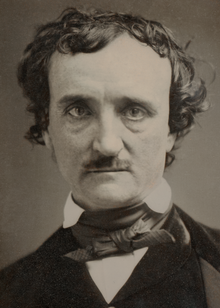
Edgar Allan Poe daguerreotype crop.png
Edgar Allan Poe ( born Edgar Poe; January 19, 1809 – October 7, 1849) was an American author, poet, editor, and literary critic, considered part of the American Romantic Movement. Best known for his tales of mystery and the macabre, Poe was one of the earliest American practitioners of the short story, and is generally considered the inventor of the detective fiction genre. He is further credited with contributing to the emerging genre of science fiction.[1] He was the first well-known American writer to try to earn a living through writing alone, resulting in a financially difficult life and career.

*Philosophy of Composition

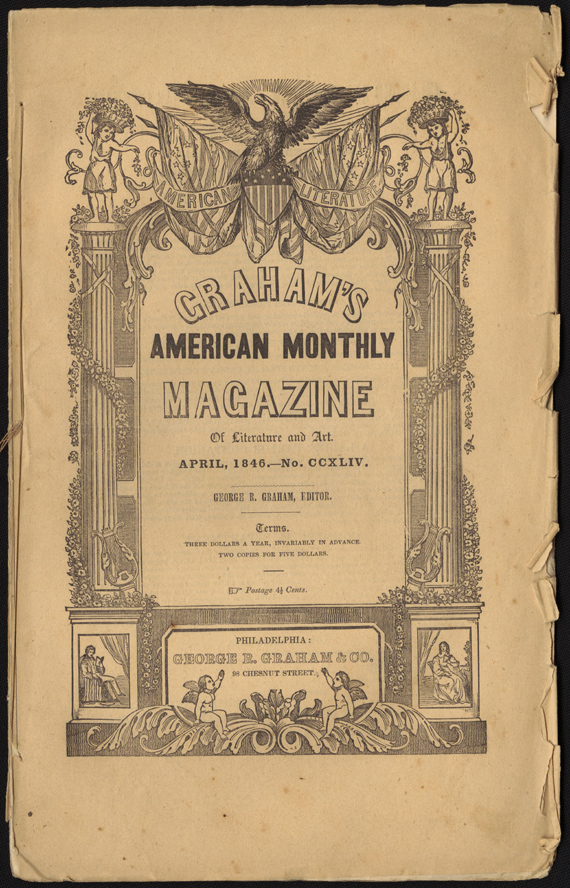
"The Philosophy of Composition" is an 1846 essay written by American writer Edgar Allan Poe that elucidates a theory about how good writers write when they write well. He concludes that length, "unity of effect" and a logical method are important considerations for good writing. He also makes the assertion that "the death... of a beautiful woman" is "unquestionably the most poetical topic in the world". Poe uses the composition of his own poem "The Raven" as an example. The essay first appeared in the April 1846 issue ofGraham's Magazine. It is uncertain if it is an authentic portrayal of Poe's own method.
→ brief/ melancholy/ didactic

----------------------------------------------

10)"Ode on a Grecian Urn"(古瓶頌)

"Ode on a Grecian Urn" is a poem written by the English Romantic poet John Keats in May 1819 and published anonymously in the January 1820, Number 15 issue of the magazine Annals of the Fine Arts (see 1820 in poetry).
*   "Beauty is truth, truth beauty,—that is all
                Ye know on earth, and all ye need to know."
--------------------------------------------

11) The Raven
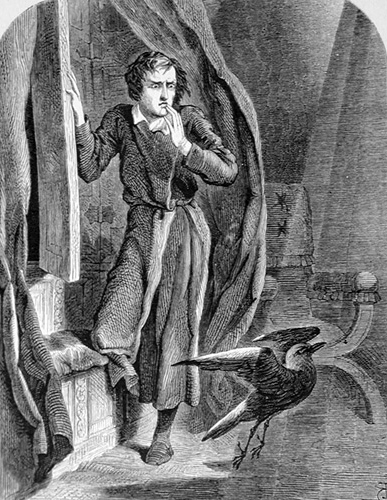
"The Raven" is a narrative poem by American writer Edgar Allan Poe. First published in January 1845, the poem is often noted for its musicality, stylized language, and supernaturalatmosphere. It tells of a talking raven's mysterious visit to a distraught lover, tracing the man's slow fall into madness. The lover, often identified as being a student,[1][2] is lamenting the loss of his love, Lenore. Sitting on a bust of Pallas, the raven seems to further instigate his distress with its constant repetition of the word "Nevermore". The poem makes use of a number of folk and classical references.
*被應用到高更的作品裡

PAUL GAUGUIN

NEVERMORE

-----------------------------------------------------


Word:

1) epical: related to God, Hero, tragic flaw

2) mal- :hostile
*malignant: something bad
*malign: 誹謗
*malevolent ←→ benevolent


2014年11月12日 星期三

2014.11.12 note: Moby-Dick (week 10)

1.Moby-Dick


Moby-Dick; or, The Whale (1851) is a novel by Herman Melville, in which Ishmael narrates the monomaniacal quest of Ahab, captain of the whaler Pequod, for revenge on the albino sperm whale Moby Dick, which on a previous voyage destroyed Ahab's ship and severed his leg at the knee. Although the novel was a commercial failure and out of print at the time of the author's death in 1891, its reputation grew immensely during the twentieth century. D. H. Lawrence called it "one of the strangest and most wonderful books in the world," and "the greatest book of the sea ever written."[1] Moby-Dick is considered a Great American Novel and an outstanding work of the Romantic period in America and the American Renaissance. "Call me Ishmael" is one of world literature's most famous opening sentences.

*

Themes (quest for knowing and knowing--體驗和探索是無止境的)

1.The Limits of Knowledge
2.The Deceptiveness of Fate
3.The Exploitative Nature of Whaling

Motifs

1.Whiteness
2.Surfaces and Depths

Symbols

1.The Pequod
2.Moby Dick
3.Queequeg’s Coffin
------------------------------------------------

Naturalism was a literary movement or tendency from the 1880s to 1930s that used detailed realism to suggest that social conditions, heredity, and environment had inescapable force in shaping human character. It was a mainly unorganized literary movement that sought to depict believable everyday reality, as opposed to such movements as Romanticism orSurrealism, in which subjects may receive highly symbolic, idealistic or even supernatural treatment.
------------------------------------------------

3)James Monroe
James Monroe ( April 28, 1758 – July 4, 1831) was the fifth President of the United States (1817–1825). Monroe was the last president who was a Founding Father of the United States and the last president from the Virginia dynasty and the Republican Generation.[1]Monroe was of the planter class and fought in the American Revolutionary War. He was wounded in the Battle of Trenton with a musket ball to his shoulder. After studying law under Thomas Jefferson from 1780 to 1783, he served as a delegate in the Continental Congress. As an anti-federalist delegate to the Virginia convention that considered ratification of the United States Constitution, Monroe opposed ratification, claiming it gave too much power to the central government. He took an active part in the new government, and in 1790 he was elected to the Senate of the first United States Congress, where he joined the Jeffersonians. He gained experience as an executive as the Governor of Virginia and rose to national prominence as a diplomat in France, when he helped negotiate the Louisiana Purchase in 1803. During the War of 1812, Monroe held the critical roles of Secretary of State and the Secretary of War under President James Madison.

*門羅主義 (個人主義、管好自己的事)
門羅主義(Monroe Doctrine)發表於1823年,表明美利堅合眾國當時的觀點,即歐洲列強不應再殖民美洲,或涉足美國與墨西哥等美洲國家之主權相關事務。而對於歐洲各國之間的爭端,或各國與其美洲殖民地之間的戰事,美國保持中立。相關戰事若發生於美洲,美國將視為具敵意之行為。