1) When I was one and twenty

* the heart out of bosom
was never given in vain
---------------------------------------------
2) Rip Van Winkle
"Rip Van Winkle" is a short story by American author Washington Irving published in 1819 as well as the name of the story's fictional protagonist. Written while Irving was living inBirmingham, England, it was part of a collection entitled The Sketch Book of Geoffrey Crayon, Gent. Although the story is set in New York's Catskill Mountains, Irving later admitted, "When I wrote the story, I had never been on the Catskills."
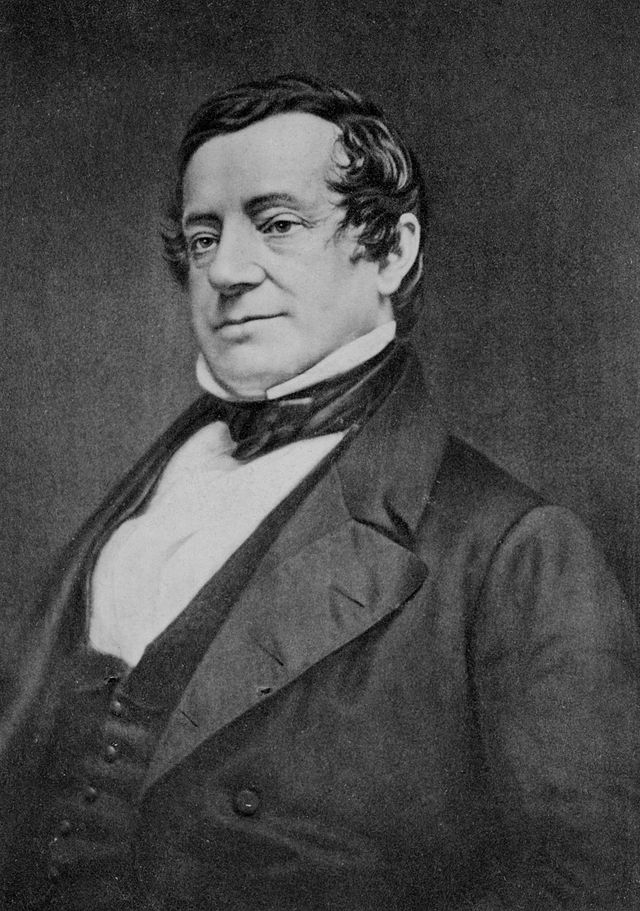
Washington Irving (April 3, 1783 – November 28, 1859) was an American author, essayist, biographer, historian, and diplomat of the early 19th century. He is best known for his short stories "Rip Van Winkle" (1819) and "The Legend of Sleepy Hollow" (1820), both of which appear in his book The Sketch Book of Geoffrey Crayon, Gent.. His historical works include biographies of George Washington, Oliver Goldsmith and Muhammad, and several histories of 15th-century Spain dealing with subjects such as Christopher Columbus, the Moors and the Alhambra. Irving served as the U.S. ambassador to Spain from 1842 to 1846.
-------------------------------------------
3) Xerox copy

a copy made by a xerographic printer
* Carbon Copy
A carbon copy is the under-copy of a document created when carbon paper is placed between the original and the under-copy during the production of a document.[1] With the advent of email, the abbreviation cc or bcc (blind carbon copy) has also come to refer to simultaneously sending copies of an electronic message to secondary recipients.
------------------------------------------------
4) The Romantic Period
*from 1812 ( assassination of Lincoln)
Romanticism (also the Romantic era or the Romantic period) was an artistic, literary, and intellectual movement that originated in Europe toward the end of the 18th century and in most areas was at its peak in the approximate period from 1800 to 1850. Partly a reaction to the Industrial Revolution,[1] it was also a revolt against the aristocratic social and political norms of the Age of Enlightenment and a reaction against the scientific rationalization of nature.[2] It was embodied most strongly in the visual arts, music, and literature, but had a major impact on historiography,[3] education[4] and the natural sciences.[5] Its effect on politics was considerable and complex; while for much of the peak Romantic period it was associated with liberalism and radicalism, its long-term effect on the growth of nationalism was probably more significant. The intellectual historian Isaiah Berlin has referred to Romanticism as "the last great 'transvaluation of values' in modern history."
*the assassination of Lincoln

United States President Abraham Lincoln was shot on Good Friday, April 14, 1865, while attending the play, Our American Cousin, at Ford's Theatre as the American Civil War was drawing to a close.[1] The assassination occurred five days after the commander of the Confederate Army of Northern Virginia, General Robert E. Lee, surrendered to Lieutenant General Ulysses S. Grant and the Union Army of the Potomac.
------------------------------------
5) 中國合夥人 《海闊天空》(film)

-------------------------------------------------
6) American Dream

The American Dream is a national ethos of the United States, a set of ideals in which freedom includes the opportunity for prosperity and success, and an upward social mobility for the family and children, achieved through hard work in a society with few barriers. In the definition of the American Dream by James Truslow Adams in 1931, "life should be better and richer and fuller for everyone, with opportunity for each according to ability or achievement" regardless of social class or circumstances of birth.[1]
The idea of the American Dream is rooted in the United States Declaration of Independence which proclaims that "all men are created equal" and that they are "endowed by their Creator with certain inalienable Rights" including "Life, Liberty and the pursuit of Happiness."
-----------------------------------------------
7) Philadelphia (費城)

In 1682, William Penn founded the city to serve as capital of Pennsylvania Colony. By the 1750s, Philadelphia had surpassed Boston to become the largest city and busiest port in British America, and second in the British Empire, behind London.[5][6] During the American Revolution, Philadelphia played an instrumental role as a meeting place for the Founding Fathers of the United States, who signed the Declaration of Independence in 1776 and the Constitution in 1787. Philadelphia was one of the nation's capitals during the Revolutionary War, and the city served as the temporary U.S. capital while Washington, D.C., was under construction. During the 19th century, Philadelphia became a major industrial center and railroad hub that grew from an influx of European immigrants. It became a prime destination for African Americans during the Great Migration and surpassed two million occupants by 1950.
The city is the center of economic activity in Pennsylvania, and is home to the Philadelphia Stock Exchange and several Fortune 500 companies.
Philadelphia is known for its arts and culture. The cheesesteak and soft pretzel are emblematic of Philadelphia cuisine, which is shaped by the city's ethnic mix. The city has more outdoor sculptures and murals than any other American city,[7] and Philadelphia's Fairmount Park is the largest landscaped urban park in the world.[8]Gentrification of Philadelphia's neighborhoods continues into the 21st century and the city has reversed its decades-long trend of population loss.
------------------------------------------------
Word:
1) editorial : 社論

沒有留言:
張貼留言